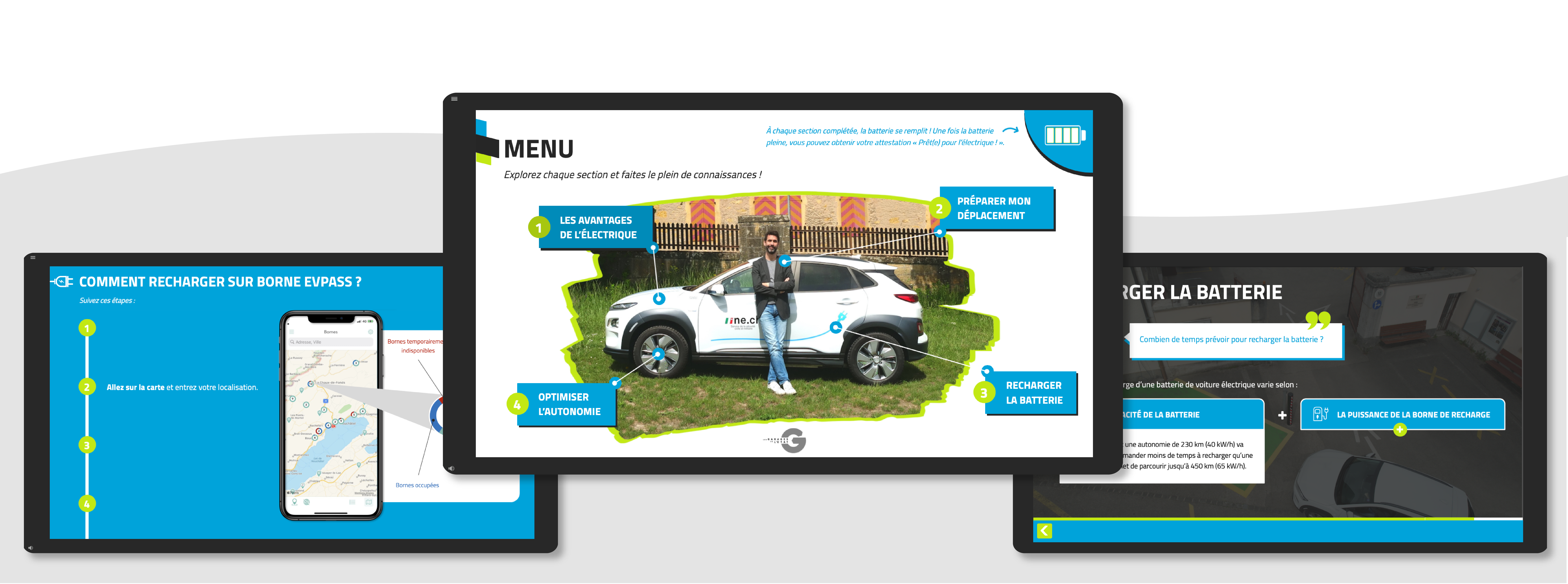
Since 2019, the canton of Neuchâtel has put electric vehicles on the road for its services. We have created a concise and attractive e-learning module to help future electric vehicle drivers get behind the wheel with confidence.
The module is divided into short sections, each of which addresses user concerns. Video sketches show situations that could be experienced with a touch of humour. Gamification elements add an extra dimension of fun.
For eSkills, this project is an opportunity to contribute to the canton’s energy transition and to anchor its desire to develop digital training projects on sustainability issues.
“Notre projet s’inscrit dans le cadre de l’implémentation du plan de mobilité de l’administration cantonale qui intègre le déploiement de véhicules électriques. Cette motorisation vient avec son lot de questions. Comment rassurer les utilisateurs et donner toutes ces chances à cet investissement de répondre aux besoins dans un environnement pluridisciplinaire et décentralisé ? Formation et communication : pas si simple ! Partant du fait que nous n’avons ni les compétences nécessaires, ni le temps pour créer un module dédié à la voiture électrique, nous avons recherché un partenaire qui saurait nous comprendre et transcrire nos besoins. Au premier abord, le contact avec eSkills nous a paru presque trop simple pour être efficace. Mais le résultat est là, et même mieux que dans nos rêves. Les feedbacks sont excellents. Le module est ludique, attrayant et presque addictif. Les participants ont du plaisir à exécuter le module, ils sont presque déçus que cela ne dure que 20 minutes ! Côté implication, 3 heures d’atelier et un investissement d’équipe d’une trentaine d’heures pour le tournage et la recherche de témoignages ont suffi pour déployer en quatre mois un module de très bonne qualité, facile à installer et simple à utiliser.”
Office of the United Nations
High Commissioner for Human Rights (OHCHR)
Indigenous People's Rights
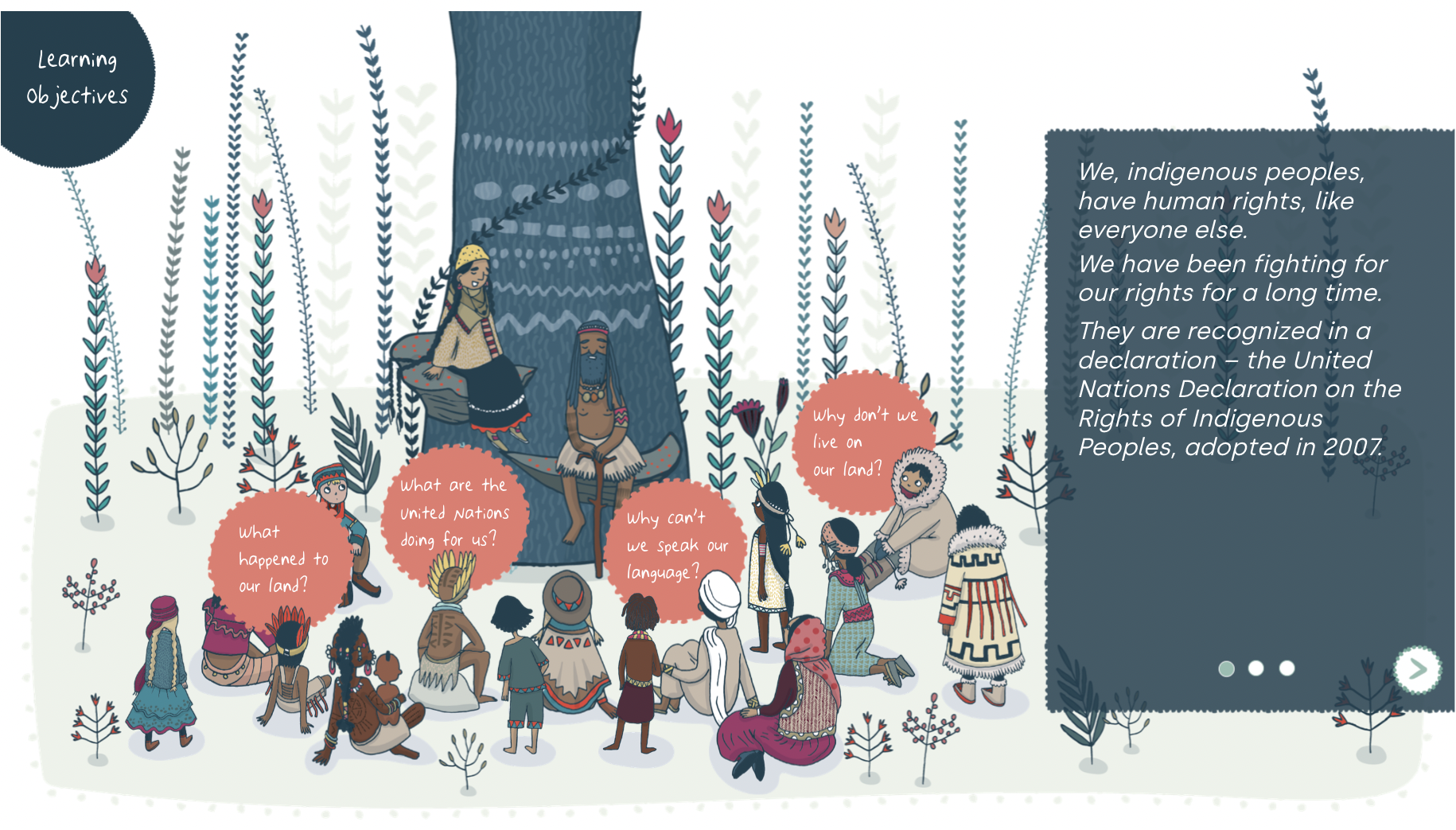
The cultures of indigenous peoples continue to be threatened, while the protection and promotion of their rights is undermined. These conflicts and human rights violations lead to their displacement and dispossession.
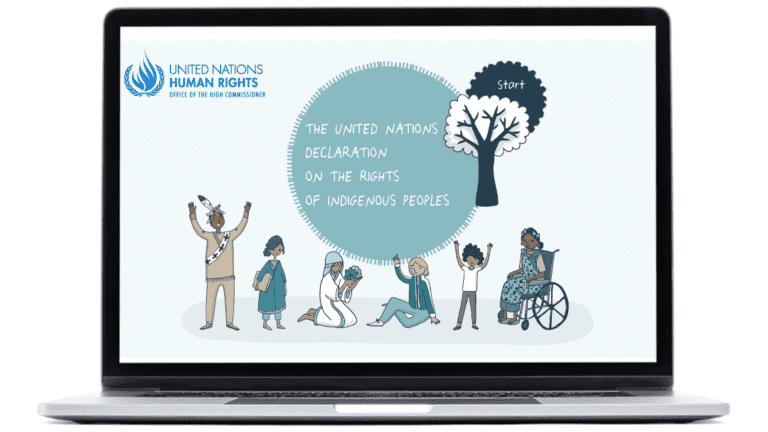
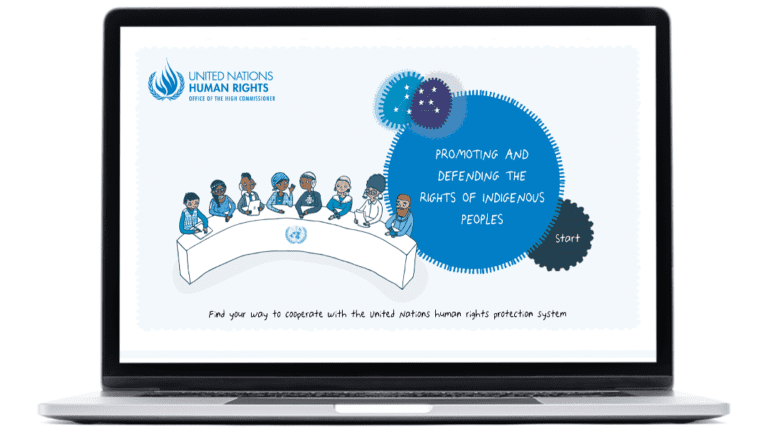
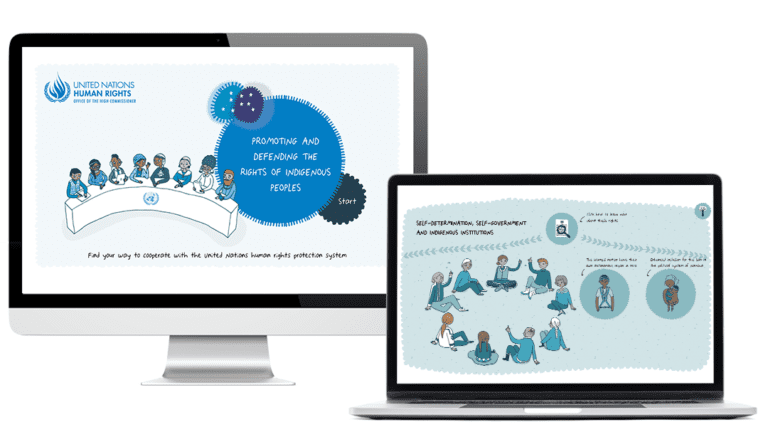
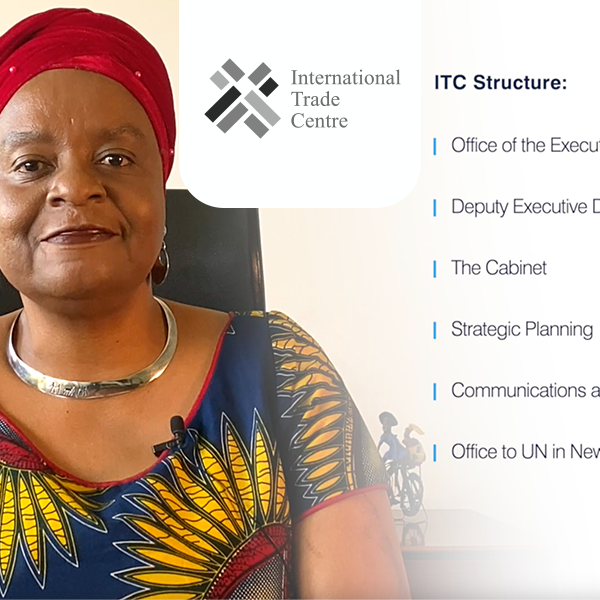
The Office of the United Nations High Commissioner for Human Rights (OHCHR) commissioned eSkills to develop an awareness-raising module on the rights of indigenous peoples, and to present the different mechanisms available within the UN framework to protect these rights.
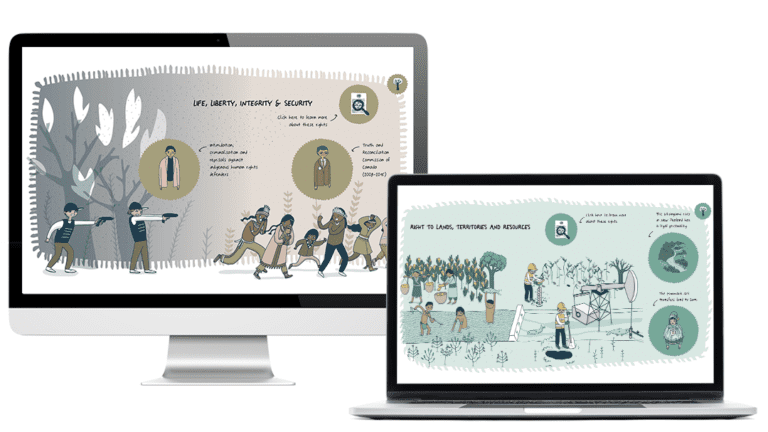
The first module is a simple translation of the United Nations Declaration on the Rights of Indigenous Peoples (UNDRIP). Several real cases and a fictional case study are used to illustrate violations and rights.
The second module introduces the UN human rights system and the different mechanisms and treaties available to promote and protect the rights of indigenous peoples.
“For us, this important project presented a double challenge: make complex legal definitions and UN processes accessible to all and ensure that the illustrations and imagery used would adequately reflect the cultural identity of indigenous peoples. Our eSkills partner proved to be very patient and open to understand the sensitivities at stake. They approached their work with enthusiasm and urgency, listened to and translated our needs into the design and production, and did so in a cost-effective manner, and always with great flexibility, patience and genuine interest for the topic.”
Paulo David, Chief Indigenous Peoples and Minorities Section, United Nations Human Rights Office.
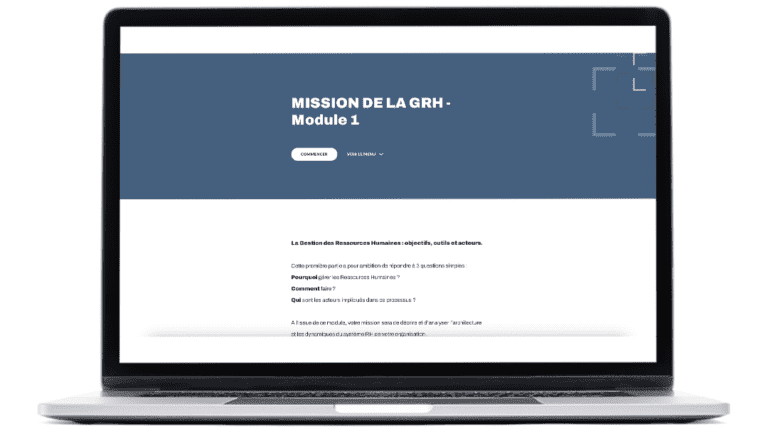
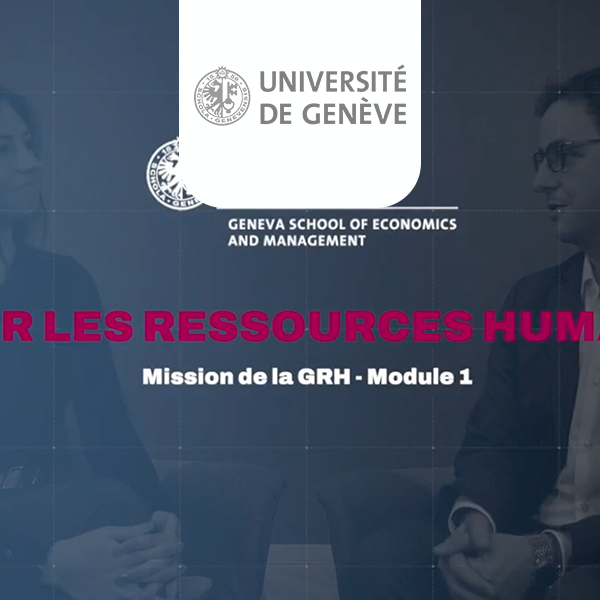
The Geneva School of Economics and Management (GSEM) asked eSkills to produce the digital part of a hybrid course on human resources. We had to design this digital core curriculum and its articulation with the classroom sessions of several programmes.
We have worked closely with Prof. Thomas Fischer to transform his face-to-face course into a rich and varied digital journey made up of 4 modules. Instead of the traditional “talking head” video format used in MOOCs, we staged conversations between him and Camille Lake, our in-house bilingual moderator. We also came up with original formats such as the vox pop that opens each module and remote collaborative activities. Each module ends with a production task that links back to the face-to-face session. This experience allowed us to imagine the digital transformation of a university course, and to work with a professor to imagine how he could use the potential of digital to communicate his expertise.
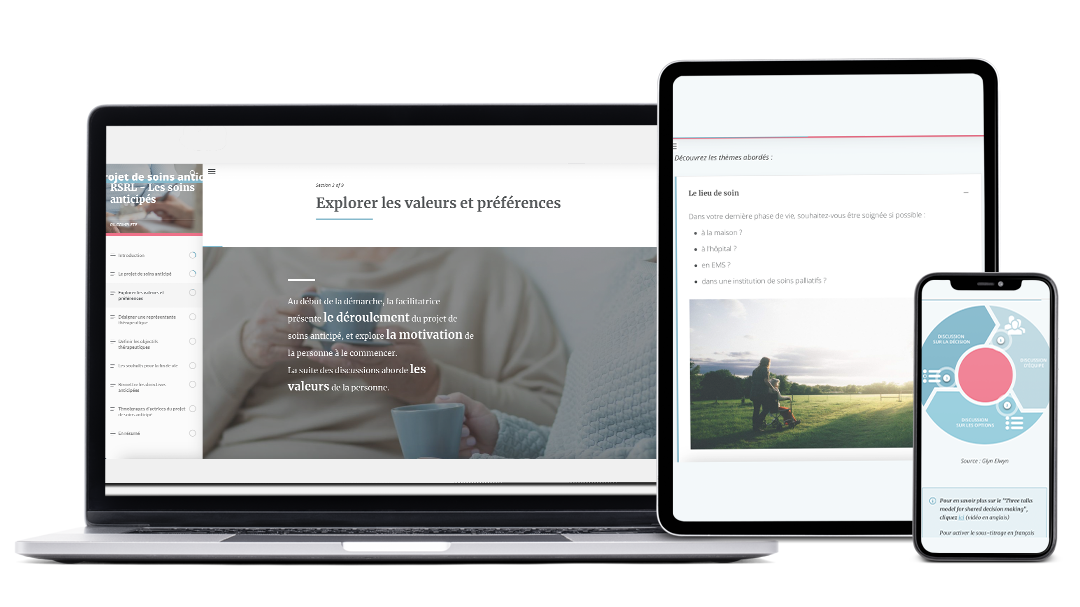
The Réseau Santé Région Lausanne and the CHUV regularly train new facilitators to guide beneficiaries through their advance care planning. They contacted us to digitise some of the theoretical aspects of the training so that they could focus on the practical application in the classroom.
For this project, which deals with the sensitive issue of end-of-life care, we opted for a narrative approach. Over the course of 4 modules, the learner follows the journey of the beneficiaries and discovers the key concepts through interactive activities, animated videos, interviews, etc.
“Le projet de soins anticipé est un processus de discussion qui aborde des questions très intimes et profondes, il n’est pas évident de le présenter de manière simple dans un e-learning. Nous avons beaucoup apprécié le fait que l’équipe d’eSkills cherche vraiment à comprendre cette approche en profondeur en questionnant, reformulant afin d’en saisir les enjeux et subtilités pour pouvoir le présenter avec tact et justesse. La collaboration a été très agréable, eSkills nous a guidé dans chacune des étapes de manière proactive et structurée. Cela nous a permis de rendre la matière que nous voulions transmettre concrète, interactive et surtout accessible à tous, cela au travers d’histoires auxquelles chacun peut s’identifier.
Le résultat final nous a montré l’immense plus-value apportée par eSkills qui a créé des modules d’e-learning à la fois clairs et concis mais aussi agréables à découvrir et parcourir, qui donnent envie d’apprendre. Ces modules sont de magnifiques outils pour sensibiliser et former les professionnel∙le∙s de la santé ainsi que la population sur le projet de soins anticipé et les thématiques qu’il aborde, qui nous concerneront tous un jour ou l’autre.”
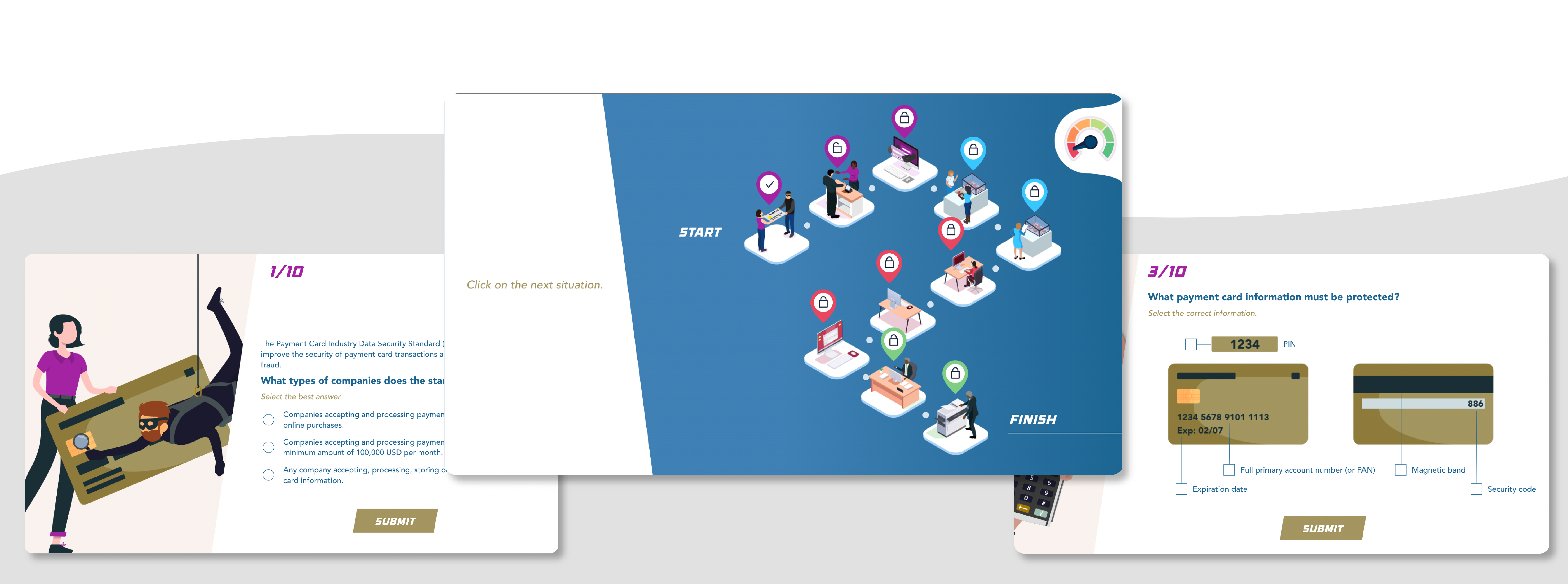
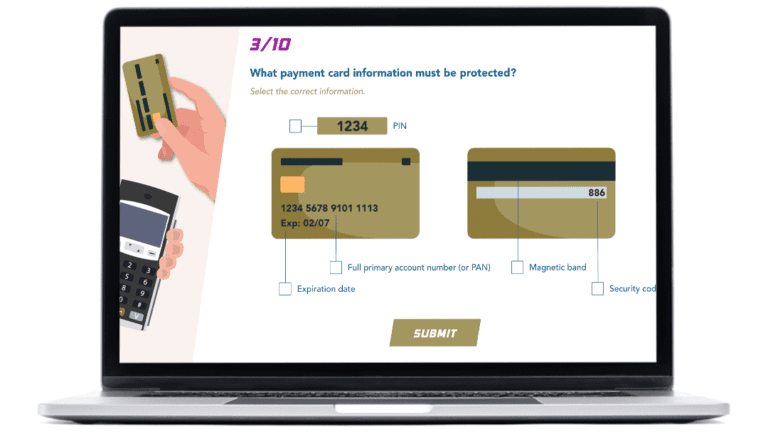
How do you tackle a serious topic like payment card industry data security standards? By playing the game!
In this short and fun module, the learner has to take ten steps, make the right decisions and achieve a minimum score in order to protect customers’ data and means of payment.
The Swiss Sustainable Finance (SSF) Academy offers a series of online courses on sustainable investment, tailored specifically to the needs of finance professionals.
Their objective: to discover how to implement a sustainable investment policy and to understand the business opportunities.
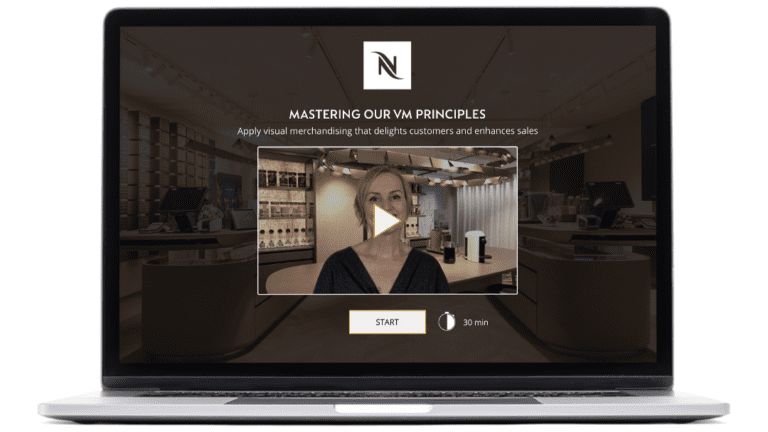
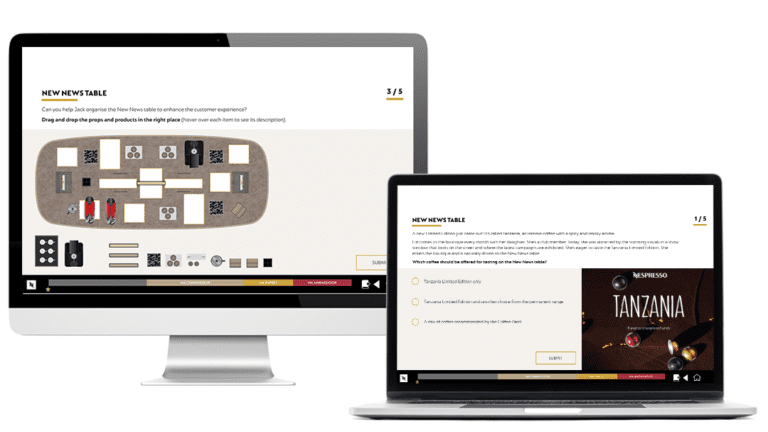
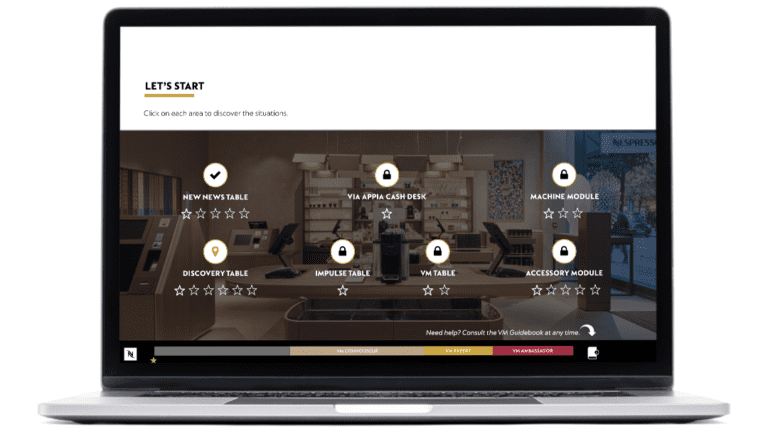
To provide an alternative to face-to-face visual merchandising workshops, Nespresso asked us to develop a digital training solution for its store staff.
Through a gamified scenario, the learner takes on the role of a visual merchandising champion. They are then confronted with increasingly complex situations. Their decisions affect the daily commercial performance of the store.
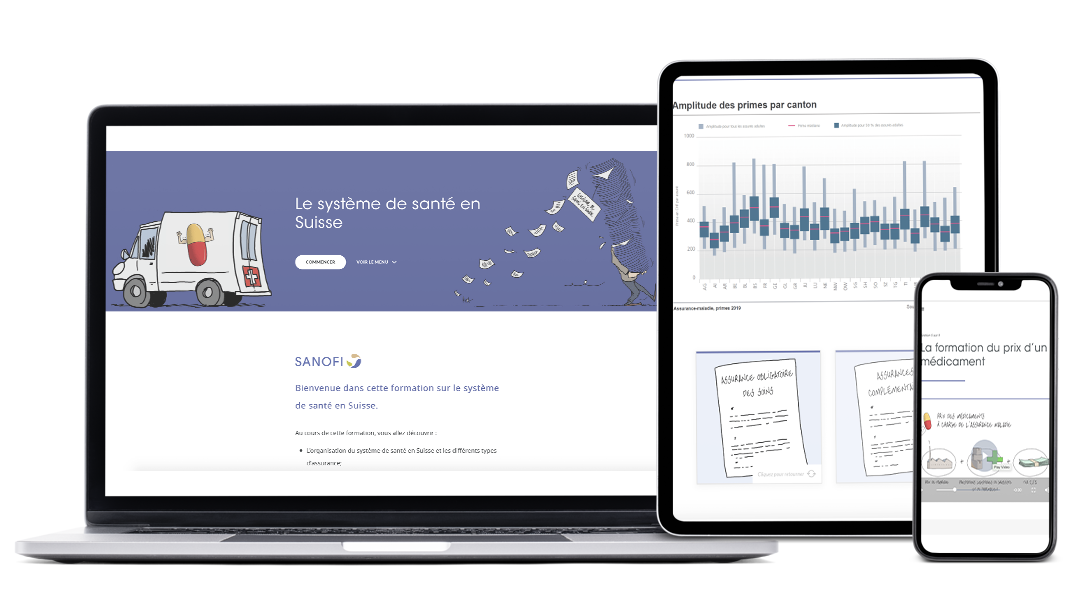
Sanofi, a world leader in healthcare, specialises in the research and development of pharmaceutical solutions.
In this course, employees learn about the organisation of the Swiss healthcare system. Who pays for compulsory basic insurance? What about supplementary insurance? How are medicines priced? On what basis? Each concept is richly illustrated in order to understand a relatively complex ecosystem in a playful way!
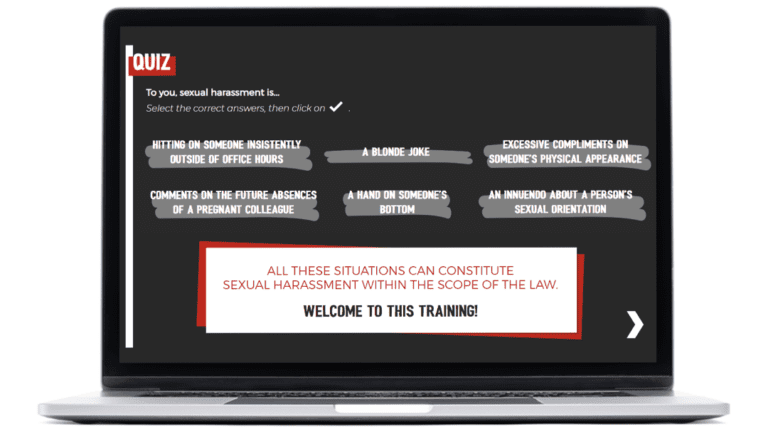
“I didn’t know”, “We can’t joke around anymore”, “You’re a killjoy”.
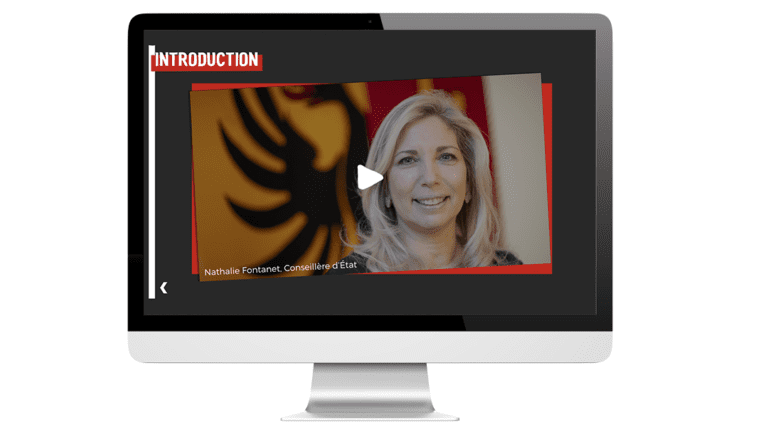
When it comes to sexual harassment, the State of Geneva does not tolerate any excuses from its employees.
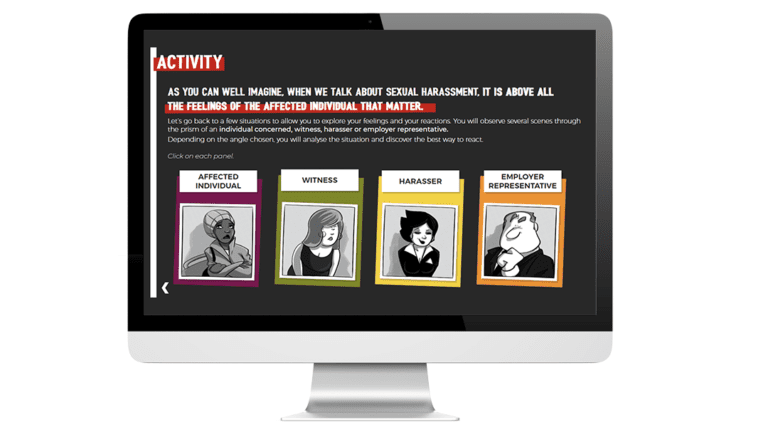
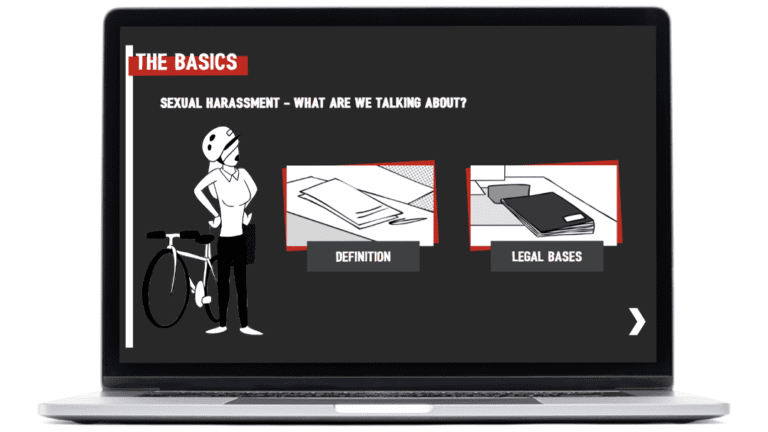
Sexual harassment is a serious form of discrimination, and an attack on the personality and dignity of the person concerned. Sexual harassment in the workplace is prohibited by law.
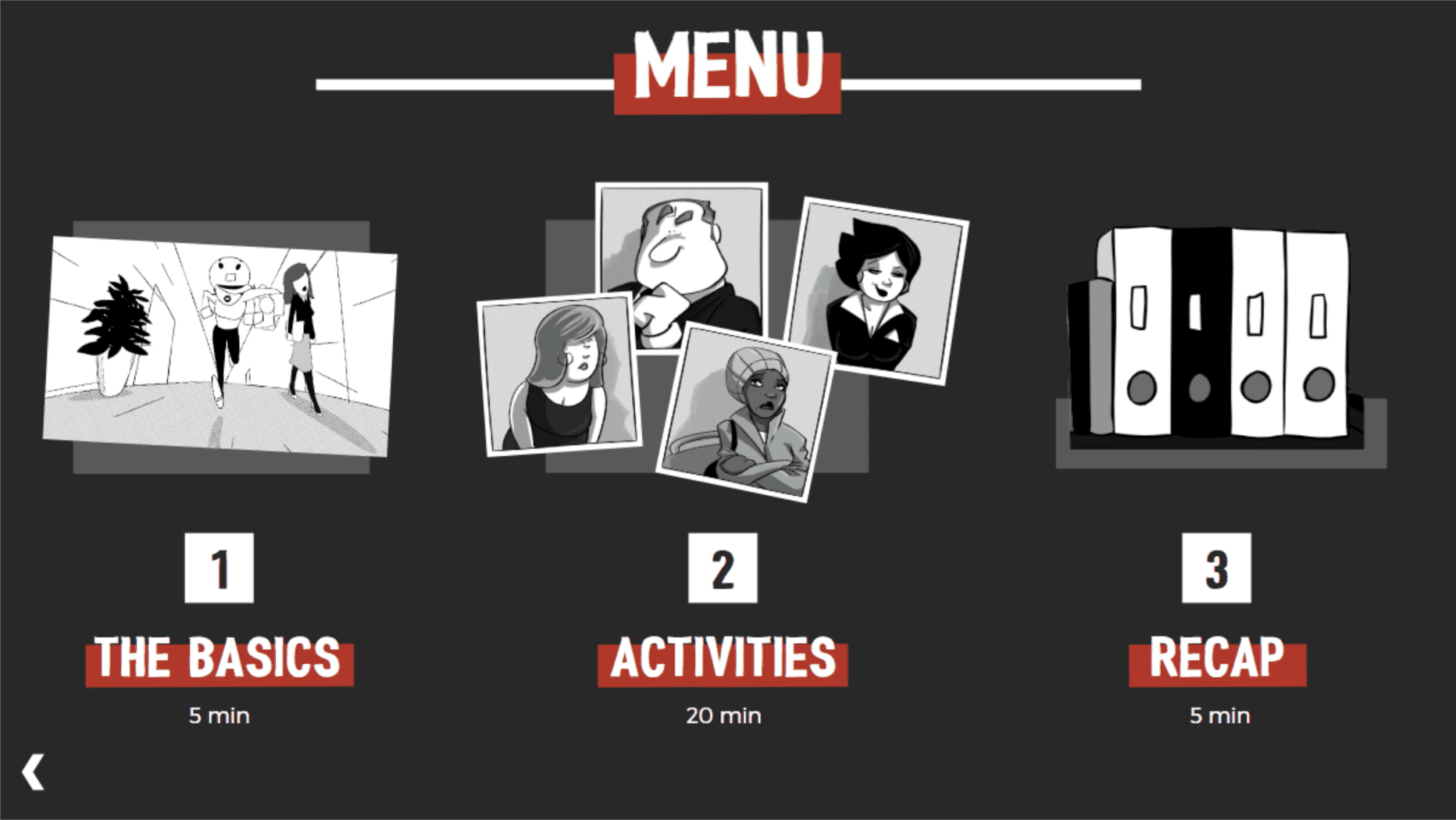
This training allows the audience to put themselves in the shoes of a victim, a witness and a perpetrator of sexual harassment through realistic scenarios. This e-learning module is made available free of charge to companies/organisations by the State of Geneva. If you are interested in having your own version, please contact us.
Introduction to Security Sector Reform and Governance
In the framework of a regional project set up in the Sahel (Burkina Faso, Niger, Mali), the Geneva Centre for Security Sector Governance (DCAF) wanted to create a blended learning course to introduce the notions of governance and reform of the security sector.
This module can be offered to armed forces, members of parliaments or civil society actors, so we wanted to represent this diversity in the experts contributing to the course, including researchers, representatives of armed forces and international organisations. Each section of the course concludes with an individual or collective reflection activity, which can be organised either face-to-face or remotely, depending on the needs of the DCAF teams.
This project involved numerous remote interviews with experts in the field on technical topics related to security issues. We also had to design a number of production activities to stimulate thought and interaction between the participants. In accordance with our client’s needs, we developed the course and the various media on Easy Generator, while respecting DCAF’s visual identity.
client testimonial
“Our partnership with eSkills has been a great success. We were facing huge difficulties to create an eLearning course by ourselves and eskills team members knew how to adapt their methods to fulfill our requirements. They proposed a very interesting pedagogical approach, they had been able to adapt to a specific content (security sector governance) and to a specific audience (security sector members) and to proposed accurate and attractive digital media.
They allowed us to create an accurate e-learning course, adapted to our audience, from members of parliaments to security forces members. They ran interviews with our partners to illustrate the course through concise but precise examples. Since the official launch last year, the e-learning has been used on a regular basis, by our partners in Burkina Faso, in Mali and in Niger”.
Apolline Gagliardi, Advisor, Defense and Security sector governance, DCAF
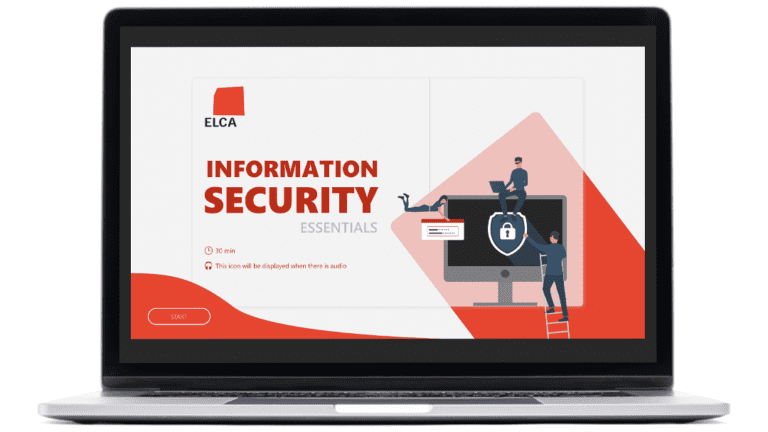
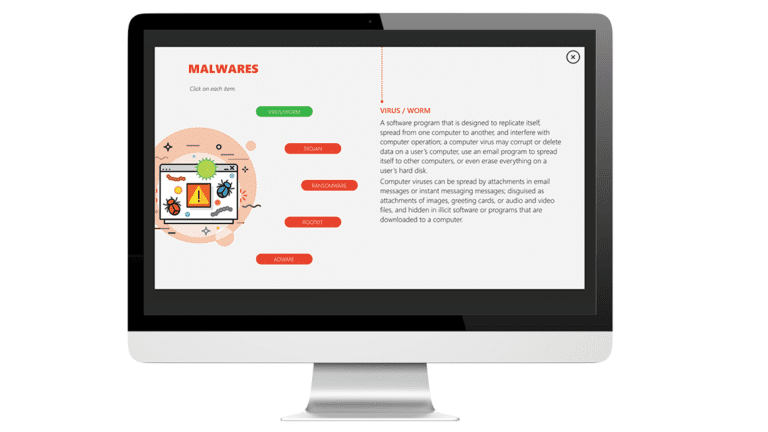
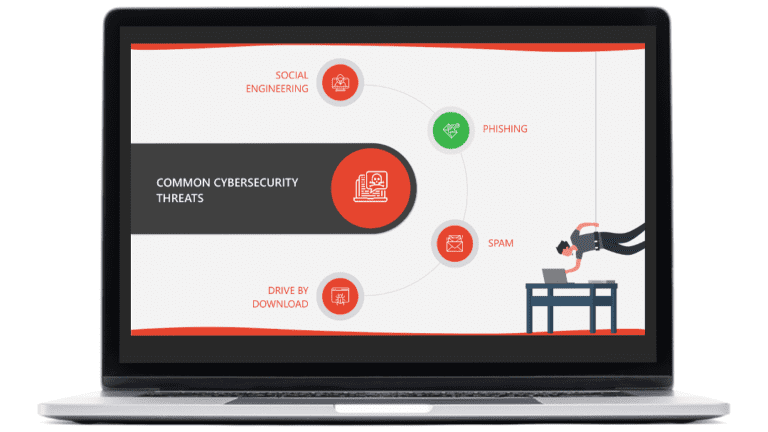
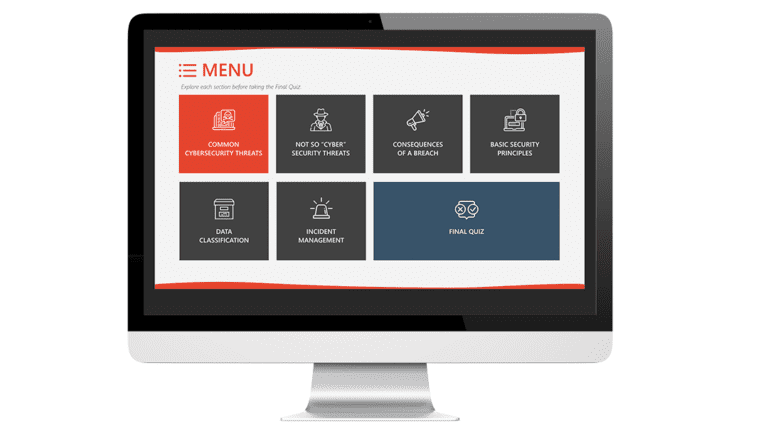
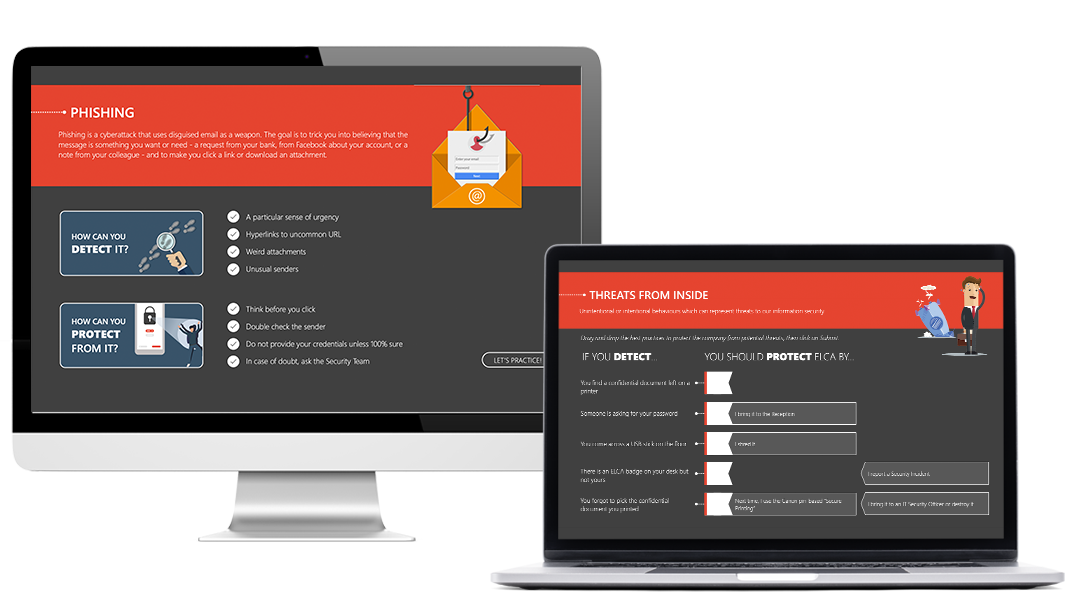
Common cybersecurity threats, data classification, compliance and incident management are some of the topics covered in this training, which enables ELCA employees to effectively deal with information security risks.